


VSP Vision Care
woman holding glasses touching face

Taking the Strain Out of Screen Time

man using computer

More than two-thirds of workers struggle with digital eye strain1

Can you recall the last time you went a full day you went without looking at a screen? If not, you’re not alone—and there’s no reason to feel guilty. Digital devices have become a necessity for everything from doing our jobs to buying concert tickets. So it’s no surprise screen time among employees averages more than 90 hours per week.2

And it’s not just screen time that’s on the rise. 71% of desk workers reported experiencing digital eye strain in 2025—up from 68% in 2024. Non-desk workers weren’t far behind, with 59% suffering from associated symptoms, including: dry or irritated eyes, headaches, blurred or double vision, and eye discomfort connected to extended screen use.3

And when your team suffers, so can your organization.

3 bottom-line impacts of all this exposure

Turns out, too much exposure doesn’t just affect workers—it can also affect your organization’s bottom line.4 Let’s take a look at three potential impacts:

1. Reduced Productivity
Workers who say they experience digital eye strain (67%) say it reduces their productivity at work, by 18.6% on average. This equates to 7.4 hours (nearly one full workday) of lost time per week.5

2. Missed Workdays
One out of four employees report taking time off due to digital eye strain. On average, these workers took 4.5 days off last year.6 For a 100-person organization, this equates to 5.6 months of lost work time annually.

3. Higher Costs
With 66% of employees reporting at least one eye issue, employers may also see increased healthcare costs related to eye exams, eyewear, and other vision care needs associated with prolonged screen exposure.7

man and woman walking

How to take the sting out of screen time

Now for the good news. There are several things you can do to support employee comfort and performance in screen-heavy environments.

Make Positive Changes to Policies and Culture:

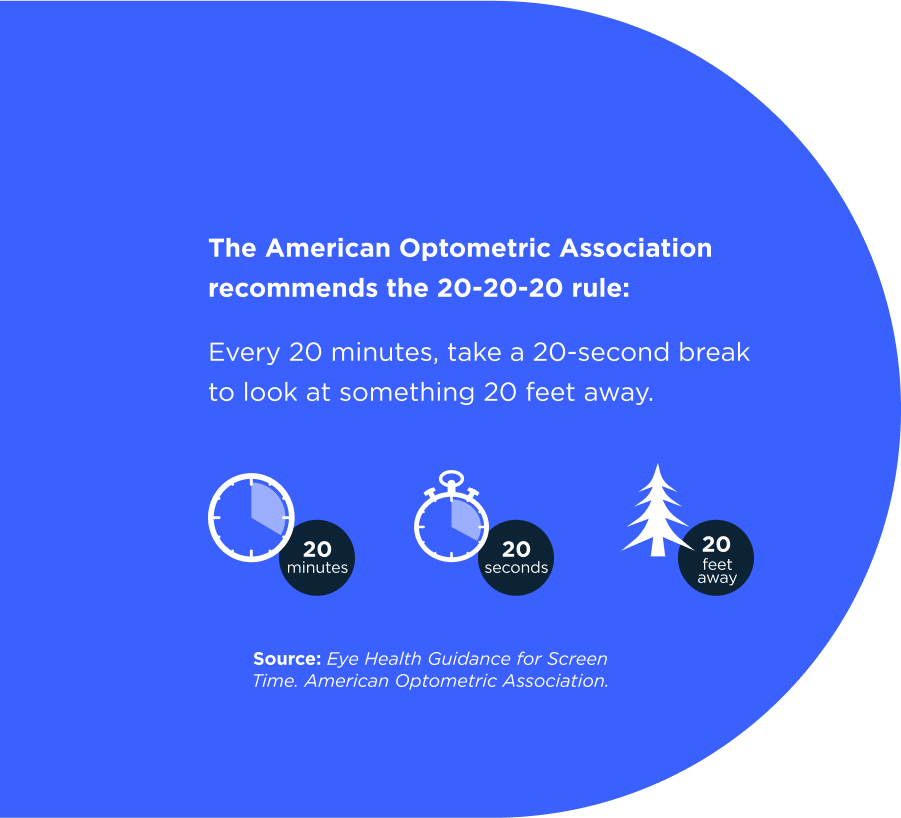
  • Encourage regular breaks throughout the workday.
  • Provide anti-glare screens or screen protectors.
  • Recommend eyewear designed to support comfort during screen use.
  • Offer flexible hours to allow for breaking up screen time.
  • Educate employees on healthy screen habits and workspace optimization.

Make Eye Health an Organizational Focus:

  • Add vision benefits with features designed to support employees viewing screens.
  • Promote the use of vision benefits at open enrollment and throughout the year.
  • Include coverage in your vision benefit for lens coatings like TechShield® Blue.
  • Champion preventive eye care and healthy screen habits.

Comfortable vision doesn’t require a prescription...anymore

Improved comfort while viewing screens shouldn’t be exclusive to those in need of vision correction. That’s why VSP LightCare™—a first-of-its-kind vision benefit—allows members to use their frame allowance on non-prescription glasses for viewing screens with added comfort.

Explore more content

Ready to Take the Strain Out of Screen Time?

Request a quote or ask us how we can help enhance your vision benefits package.

VSP logo

About VSP Vision Care

Celebrating 70 years in business, VSP was founded in 1955, and remains the only national not-for-profit vision benefits company in the United States. VSP Vision Care provides members convenient access to eye care through the nation's largest doctor network of 137,000 access points.

Footnotes

1-3. 2026 Workplace Vision Health Report: Cultivating an Eye-friendly Workplace. Workplace Intelligence study on behalf of VSP Vision Care. 4. 2025 Workplace Vision Health Report: Supporting Better Eye Health for Today’s Workforce. Workplace Intelligence Study on behalf of VSP Vision Care. 5-7. 2026 Workplace Vision Health Report, a VSP study in partnership with Workplace Intelligence.

Legal Disclaimer: Information received through VSP Vision Care's online channels is for informational purposes only and does not constitute medical advice, medical recommendations, diagnosis, or treatment. Always seek the advice of your physician or other qualified health provider with any questions you may have regarding a medical condition.