
VSP Vision Care
woman with glasses looking at papers

Eyeing Solutions
to Reduce
Healthcare Costs

Prefer video?

Watch Dr. Valerie Sheety-Pilon, VSP® Vision Care Vice President of Clinical and Medical Affairs, present on the profound impact of vision benefits on eye health and its relationship to cost savings when it comes to chronic conditions. View the full 20-minute presentation or see the transcript.

woman using phone

The Troubling Price of Healthcare

We know too well that we live in a world of rising costs. The salad or burger we get at the local drive-thru is now $8—up from $5 just a few weeks ago. And spending increases aren’t limited to fast food.

The PwC Health Research Institute estimates commercial health care spending to grow to its highest level in 13 years.1 "PwC’s Health Research Institute (HRI) is projecting an 8% year-on-year medical cost trend in 2025 for the Group market and 7.5% for the Individual market.”

This becomes more concerning when you hear that healthcare costs rank as a top financial concern for U.S. adults, with 74% saying they’re either “very” or “somewhat worried” about unexpected medical bills.2
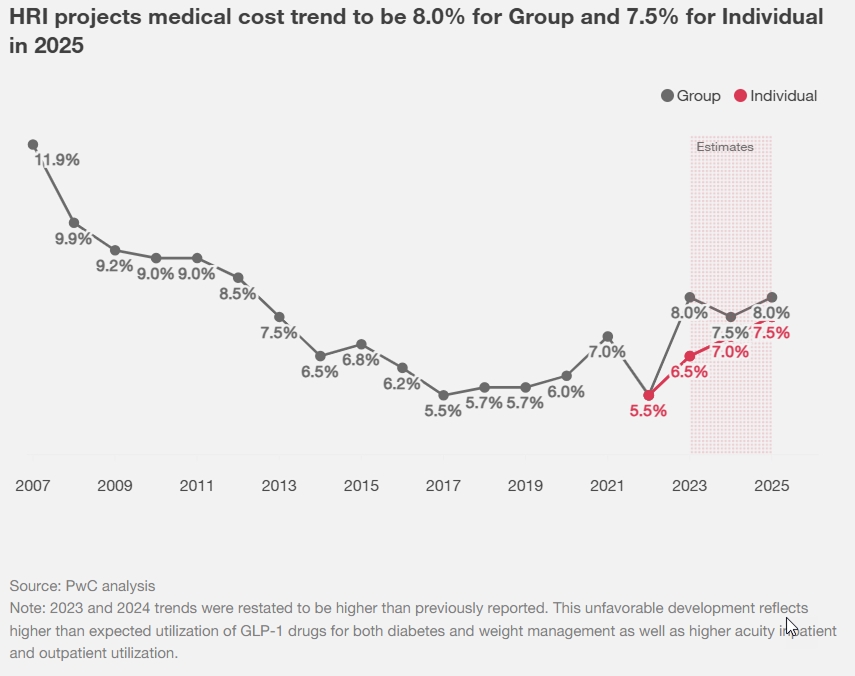
Medical Cost Trends 2014-2025

Costs Surge with Chronic Conditions

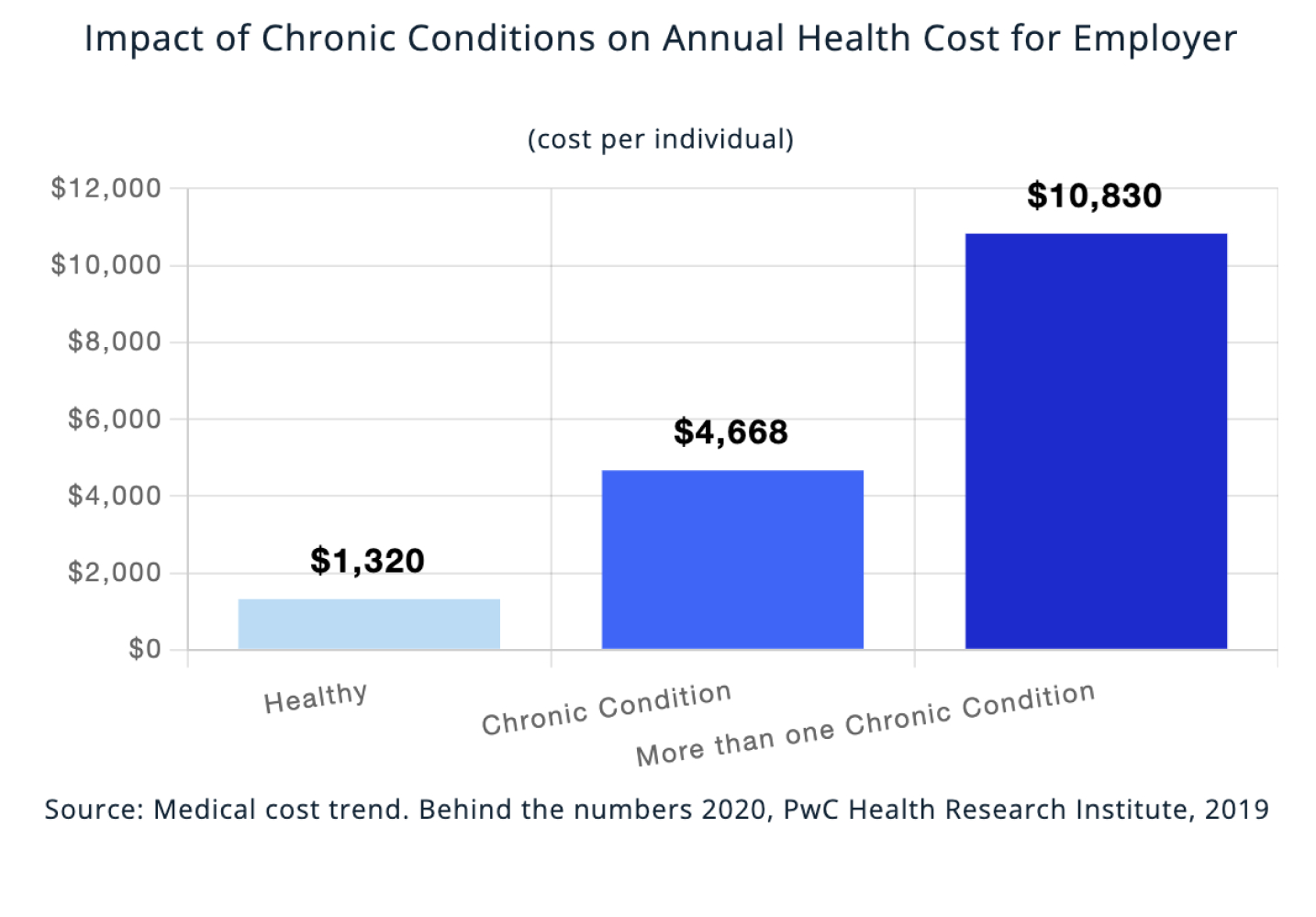
Research shows employers incur $1,320 in annual healthcare costs per healthy employee. However, chronic conditions increase costs significantly. Approximately 75 million U.S. adults have more than one chronic condition and, for those with multiple conditions, costs surge 8.2x to $10,830 per year.3

Impact of Chronic Conditions on Annual Health Cost for Employer
woman using phone

Chronic Conditions: A Spotlight on Diabetes

One example of a prevalent chronic condition that often leads to higher healthcare costs is diabetes. According to the CDC, the risk of blindness is 25x higher in patients with diabetes.4 Additionally, other eye issues like glaucoma and cataracts tend to be more prevalent.5

While these statistics are concerning, there’s good news too. More than 90% of diabetes-related vision loss can be avoided with early detection and treatment.6

This is where vision benefits become critically important. An independent study found that 34% of diabetes cases were first identified through vision claims rather than medical claims7—and those claims also led to more positive impacts, including:8

  • 27%
    Less likelihood of an ER visit
  • 9%
    Fewer required a prescription
  • 4%
    Less likelihood of hospital admission
  • 12%
    More received preventive care

By offering vision benefits in your comprehensive benefits package, you can aid in the detection of chronic conditions, facilitating timely intervention and potentially reducing the long-term impact on employees' health, healthcare costs, and overall well-being.

How Vision Benefits and Preventive Care Reduce Rising Healthcare Costs

With experts forecasting an 8% cost hike in 20259 and inflation squeezing our wallets, companies face a dilemma: absorb healthcare costs or pass them onto employees.

While companies decide where to focus and what to prioritize for employees, the importance of vision benefits and preventive care shouldn’t be overlooked.

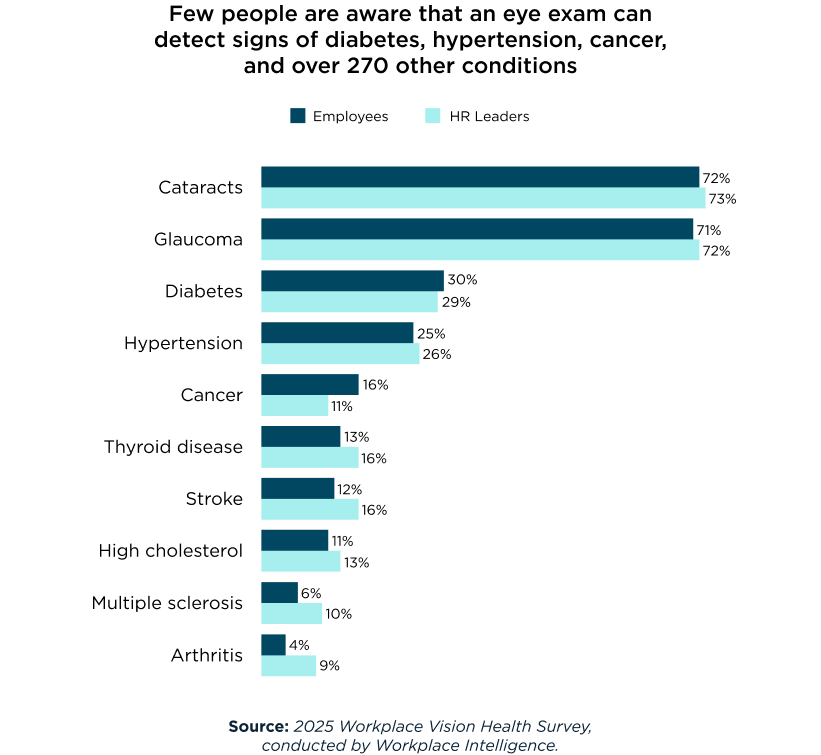
A regular eye exam is often an underestimated solution to keep employees in the “healthy” bucket and minimize costs associated with multiple chronic conditions. Not only can a routine annual eye exam detect signs of more than 270 health conditions10 but having vision benefits can also lower healthcare costs long term.

Now more than ever, investing in employees' health and well-being is a wise strategy for any organization. Not only does it help create healthier and happier workforces, but there are positive gains to the wallet too.

eye issues bar chart

Explore More Content

  • Article

    Wisdom from the Trenches: Tips for Thriving as a New HR Benefit Manager

    Start Thriving
  • DIAGNOSTIC

    See If Your Vision Plan Meets Your Employees’ Diverse Needs

    Take the Diagnostic
  • CASE STUDY

    How Vision Benefits Became Massachusetts Bankers Association’s Best Investment

    See Their Results

Let’s keep the benefits going.

Want to request a quote or chat about how VSP can help enhance your benefits package?

VSP logo

About VSP Vision Care

Celebrating 70 years in business, VSP was founded in 1955, and today is the largest vision insurance company in the United States. As the only national not-for-profit vision benefits company, VSP Vision Care provides access to eye care for over 88 million members through a network of more than 42,000 doctors.

Footnotes

  1. Medical Cost Trend: Behind the Numbers 2025. Pwc.Com. PwC Health Research Institute, Accessed February 13, 2025. https://www.pwc.com/us/en/industries/health-industries/library/behind-the-numbers.html.
  2. KFF Health Tracking Poll February 2024
  3. Medical Cost Trend: Behind the Numbers 2020, PwC Health Research Institute, June 2019
  4. Thomann KH, Marks ES, Adamczyk DT, eds. Primary Eyecare in Systemic Disease. 2nd ed. McGraw-Hill; 2001:793
  5. Wykoff CC, Khurana RN, Nguyen QD, et al. Risk of blindness among patients with diabetes and newly diagnosed diabetic retinopathy. Diabetes Care. 2021;44(3):748–756. doi:10.2337/dc20-0413
  6. Diabetes and vision loss. Centers for Disease Control and Prevention. Updated May 7, 2021. Accessed December 29, 2021.
  7. Early Chronic Condition Detection, HCMS Group, 2013.
  8. Early Chronic Condition Detection, HCMS Group, 2013.
  9. Medical Cost Trend: Behind the Numbers 2025. Pwc.Com. PwC Health Research Institute, Accessed February 13, 2025. https://www.pwc.com/us/en/industries/health-industries/library/behind-the-numbers.html.
  10. Full Picture of Eye Health, American Optometric Association, March 2022

Legal Disclaimer: Information received through VSP Vision Care's online channels is for informational purposes only and does not constitute medical advice, medical recommendations, diagnosis, or treatment. Always seek the advice of your physician or other qualified health provider with any questions you may have regarding a medical condition.